- Home
-
About Ishares
About IsharesAll-round one-stop
Inspection, testing, certification and research and development services
-
Service process
Service processAll-round one-stop
Inspection, testing, certification and research and development services -
Service item
Service itemAll-round one-stop
Inspection, testing, certification and research and development services -
Scope of inspection
Scope of inspectionAll-round one-stop
Inspection, testing, certification and research and development services-
electronElectrical applianceSuitcase and baggifthardwaremachineryLeather goodsclothing
- News information
News informationAll-round one-stop
Inspection, testing, certification and research and development services-
Corporate news
- Contact us
Contact usAll-round one-stop
Inspection, testing, certification and research and development services

 Press centerShare the latest news with youHow to inspect household appliances? Classification and classification standards for household appliancesTime:2022-04-20
How to inspect household appliances? Classification and classification standards for household appliances
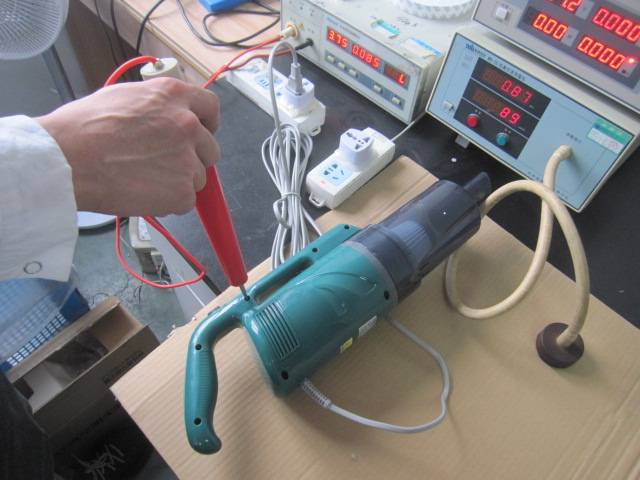
Household appliances are powered on to work, and most of the household appliances use 220V AC, which is not safe voltage. In addition, some household appliances, such as the television itself will produce more than 10,000 V high voltage, once human contact with such a high voltage, electric shock, there will be life danger. There are some components of household appliances in the presence of explosion risk, such as picture tube. Safety refers to the degree to which people are protected from hazards when using household appliances. Therefore, safety is the primary quality index to measure household appliances.
For example, in the above national standard GB4706 11998 "General Requirements for the Safety of Household and similar Electrical Appliances", household appliances must have good insulation performance and protective measures to protect the safety of consumers. For example: provides protection against electric shock, overload protection, protection against radiation, toxicity and similar hazards measures. The above standards also stipulate that household appliances should be designed and manufactured in such a way that they operate safely and reliably during normal use, without causing harm to users and the surrounding environment even if misoperation may occur during use.
The safety protection of household appliances is divided into two categories: one is according to the way of electric shock protection; The other is according to the degree of waterproofing.
In order to clarify the five anti-shock protection methods of household appliances, several basic concepts are introduced:
1 Basic insulation Insulation applied to live parts to provide basic protection against electric shock. Refers to the live parts in electrical appliances, with insulation to close the live parts, the basic protective effect of anti-shock insulation, such as copper, aluminum and other metal wire covered with insulation materials. Structurally, the insulation is placed in direct contact with the live parts.
2 Additional insulation A separate insulation applied to the basic insulation to provide protection against electric shock in case of damage to the basic insulation. Such as electric blanket heating wire outsourcing covered plastic sleeve.
3 Double insulation An insulation system consisting of basic insulation and additional insulation. Insulation with both basic insulation and additional insulation to protect against electric shock. Once the basic insulation fails, the additional insulation plays a protective role. For example, the TV power cord is double insulated.
A single insulation applied to live parts shall provide a shock protection grade equivalent to double insulation under conditions specified in GB4706 1. It provides the same degree of protection against shock as double insulation, but it is a separate insulating construction and can be composed of several insulating layers that cannot be tested separately as basic or additional insulation.
 Press centerNews recommendation
-
2023-03-06How to evaluate fabric pilling performance? With fabric fuzz pilling solution!View more
-
2023-03-06How to inspect household appliances? Classification and classification standards for household appliancesView more
-
2023-03-06How should stainless steel tableware be inspected? Shenzhen stainless steel tableware inspection company!View more



Tel:0796-83000117
Fax:xxxx-xxxxxxxxxx
Email:xin@ansqc.com
Copyright © Dongguan Anshuo Product Quality Testing Service Co., LTD All rights reserved. Technical support: Record No. :Record No. :
-
